 EN

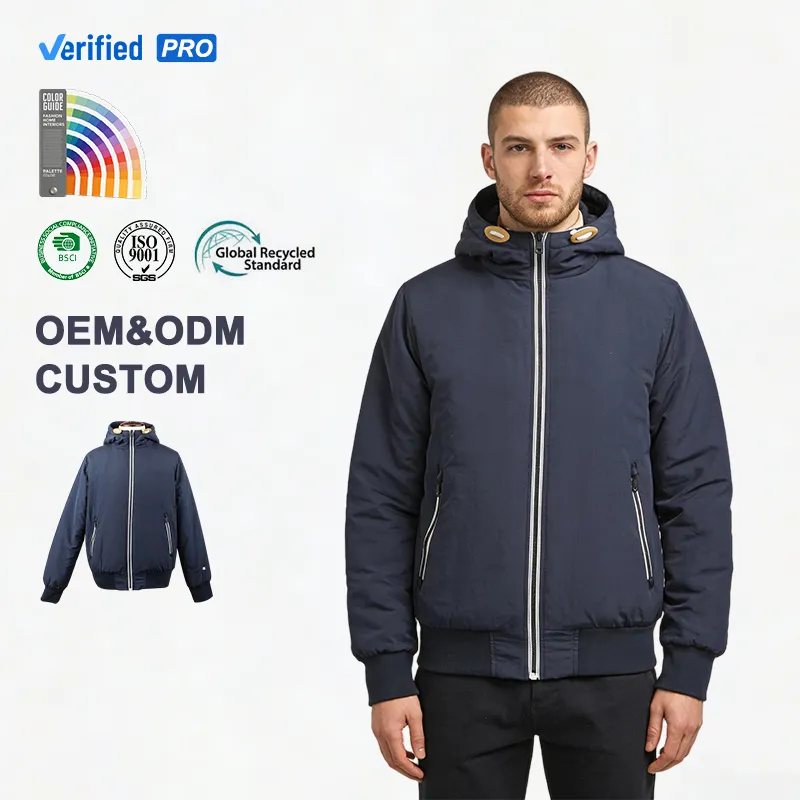
Clarify Purpose, Audience, and Brand Goals Before Designing Custom Jackets
Match jacket functionality to use case: office wear, fieldwork, travel, events, or climate-specific performance
A custom jacket’s design must begin with its primary use case. For office environments, lightweight, structured styles—like tailored softshells—balance professionalism with indoor comfort. Fieldwork demands rugged, weather-resistant fabrics with reinforced seams and tool-ready pockets. Travel-friendly jackets prioritize packability, wrinkle resistance, and discreet security features. Event giveaways lean into bold, high-impact aesthetics—often trading long-term durability for cost-effective brand visibility. Climate-specific needs add further precision: insulated puffers for cold regions, breathable mesh linings for heat, and waterproof membranes for wet conditions. Mapping these requirements early ensures form aligns with function—and prevents costly mismatches down the line. Crucially, involve end-users from the start: gather input on pocket placement, hood usability, or waterproof rating to reflect real-world routines. This collaborative step reduces returns, extends garment life, and strengthens wearer satisfaction.
Define audience expectations: balancing corporate professionalism with team culture and inclusivity
Who wears the jacket determines how it should look, fit, and feel. Corporate audiences often prefer subtle branding and refined silhouettes; startup teams may embrace casual cuts and vibrant colors. Inclusivity is non-negotiable: offer extended size ranges, unisex fits, and adaptive features like magnetic closures or adjustable hems to ensure all team members feel seen and supported. Rather than assuming preferences, survey your group—then harmonize findings with your brand’s visual identity. The result isn’t just a uniform—it’s a statement of belonging, credibility, and intentionality. When employees wear their jackets with pride, it reinforces culture, supports recruitment, and signals retention strength.
Choose the Ideal Jacket Style and Fabric for Brand Consistency and Long-Term Wear
Compare top custom jacket styles—bomber, softshell, windbreaker, and puffer—by seasonality, durability, and brand impression
Bomber jackets deliver timeless appeal with ribbed collars and cuffs, making them ideal for client-facing roles and casual Fridays. Constructed from durable nylon or polyester twill, they resist wrinkles and hold shape across mild seasons—projecting approachable professionalism. Softshells are engineered for versatility: breathable, water-resistant, and stretch-enhanced, they perform reliably from autumn through spring. Their abrasion resistance supports years of active use, reinforcing a brand committed to quality and endurance. Windbreakers excel in portability and light protection—perfect for trade shows or team-building events—though their ultra-light fabric trades some tear resistance for mobility and bold visual impact. Puffers, with quilted construction and synthetic insulation, dominate in freezing climates. Their voluminous silhouette conveys resilience and presence, offering ample space for large-scale logo applications. Matching style to season and brand voice turns functional apparel into strategic branding infrastructure.
Select fabrics (polyester, nylon, cotton blends) based on embroidery compatibility, breathability, wash resilience, and sustainability
Fabric choice directly shapes decoration quality, daily comfort, and long-term viability. Polyester remains the industry standard: it resists shrinking and fading through repeated machine washes, holds embroidery cleanly without puckering, and wicks moisture effectively—ideal for active teams. Recycled polyester (certified to the Global Recycled Standard) delivers identical performance with reduced environmental impact. Nylon offers superior toughness and abrasion resistance—making it the preferred shell fabric for puffers and windbreakers—and accepts both screen printing and embroidery with minimal distortion. Cotton blends, such as poly-cotton, improve breathability and softness for indoor settings but require careful embroidery backing to prevent pull and may wrinkle more readily. For long-term branding integrity—especially where industrial laundering is routine—prioritize tightly woven synthetics. Aligning fabric selection with usage context and care demands ensures your custom jacket remains a vibrant, trusted brand asset for years.
Maximize Brand Impact with Strategic Logo Placement and Decoration Methods for Custom Jackets
Embroidery vs. Screen Printing vs. Woven Patches: Evaluating Cost, Texture, Scalability, and Long-Term Wash Performance
The decoration method you choose affects perception, longevity, and scalability. Embroidery delivers dimensional, professional texture with excellent wash resilience—surviving 50+ cycles without fading—and remains the gold standard for left chest branding. Screen printing offers cost efficiency at scale and works well for bold, full-back graphics, though plasticky finishes may crack or fade after 20–30 washes. Woven patches provide premium detail and durability, retaining integrity through 40+ washes, and suit sponsor integration or modern sleeve placements—but require additional sewing labor. Each method has its place: embroidery for enduring corporate identity, screen printing for high-visibility campaigns, and woven patches for elevated, tactile branding.
| Method | Cost (per jacket) | Texture | Scalability (bulk orders) | Wash Performance | Best Application |
|---|---|---|---|---|---|
| Embroidery | Higher, one-time setup fee | Raised, dimensional, professional | Excellent; no per-color cost | Withstands 50+ washes without fading | Left chest logos, structured branding |
| Screen printing | Low for large runs, high setup | Flat, smooth, can feel plasticky | Cost-effective above 50 units | May crack or fade after 20‑30 washes | Bold designs, full-back graphics, events |
| Woven patches | Moderate, per-unit cost | Textured, high detail, sewn attachment | Good, but sewing adds labor and time | Durable, retains shape after 40+ washes | Premium branding, sleeve details, sponsor patches |
Optimal Logo Placement Guidelines: Left Chest (Recognition), Full Back (Authority), Sleeve (Modern Subtlety), and Sponsor Integration Best Practices
Placement transforms a jacket from clothing into communication. The left chest—traditionally over the heart—is the most recognized and trusted location, ideal for building instant brand recognition in corporate or hybrid settings. A full-back logo commands authority and visibility, especially useful for outdoor events or group photos. Sleeve placement offers contemporary subtlety—perfect for secondary branding or sponsor logos that enhance rather than dominate. When integrating sponsors, position their marks thoughtfully: upper sleeve or back yoke placements maintain visual balance while ensuring they complement—not compete with—the primary brand. Consistent placement across all jackets reinforces cohesion, amplifies team identity, and maximizes marketing ROI.
Implement a Collaborative, Efficient Custom Jacket Production Workflow
A streamlined production process starts with inclusive planning and ends with shared celebration. Begin by gathering input via structured polls or shared mood boards—capturing color preferences, logo placement ideas, and style priorities across departments. Consolidate insights into a clear creative brief, then finalize artwork collaboratively using a digital platform that supports real-time feedback. Partner with a manufacturer that provides transparent timelines, physical samples for approval, and flexible minimum order quantities. Build your timeline around key milestones: design freeze, sample sign-off, bulk production, and delivery. Conduct a fit-check session with a diverse test group before finalizing the full run—this catches sizing inconsistencies early and avoids costly reworks. Finally, coordinate distribution through a branded unboxing event that celebrates team identity and reinforces shared ownership of the outcome. This end-to-end collaboration cuts revision cycles by up to 40%, according to internal workflow benchmarks, turning procurement into a unified, values-aligned experience.
FAQ Section
Why is it important to clarify the purpose before designing custom jackets?
Clarifying the purpose helps match the jacket's functionality to its intended use case, ensuring design efficiency while avoiding costly mismatches.
What considerations should be made for branding and inclusivity?
Branding should align with corporate professionalism or team culture. Inclusivity involves offering extended size ranges, unisex fits, and adaptive features for a broader audience.
Which jacket styles are best suited for different conditions?
Bomber jackets suit mild seasons and client-facing roles, softshells work well for versatility, windbreakers ensure portability, and puffers excel in freezing climates.
How does fabric choice impact jacket longevity and branding?
Fabric impacts comfort, decoration quality, and wearability. Polyester offers durability and embroidery compatibility, while nylon excels in toughness, and cotton blends provide breathability.
What are best practices for logo placement?
Left chest designs offer the most recognition; full-back logos enhance authority, while sleeve placements provide subtle branding opportunities. Sponsors should complement primary branding.
How can collaboration improve custom jacket production workflows?
Collaborative processes, like gathering input and testing samples early, minimize revisions, align team values, and enhance overall satisfaction for end-users.
Table of Contents
- Clarify Purpose, Audience, and Brand Goals Before Designing Custom Jackets
- Choose the Ideal Jacket Style and Fabric for Brand Consistency and Long-Term Wear
- Maximize Brand Impact with Strategic Logo Placement and Decoration Methods for Custom Jackets
- Implement a Collaborative, Efficient Custom Jacket Production Workflow
-
FAQ Section
- Why is it important to clarify the purpose before designing custom jackets?
- What considerations should be made for branding and inclusivity?
- Which jacket styles are best suited for different conditions?
- How does fabric choice impact jacket longevity and branding?
- What are best practices for logo placement?
- How can collaboration improve custom jacket production workflows?
