 EN
EN

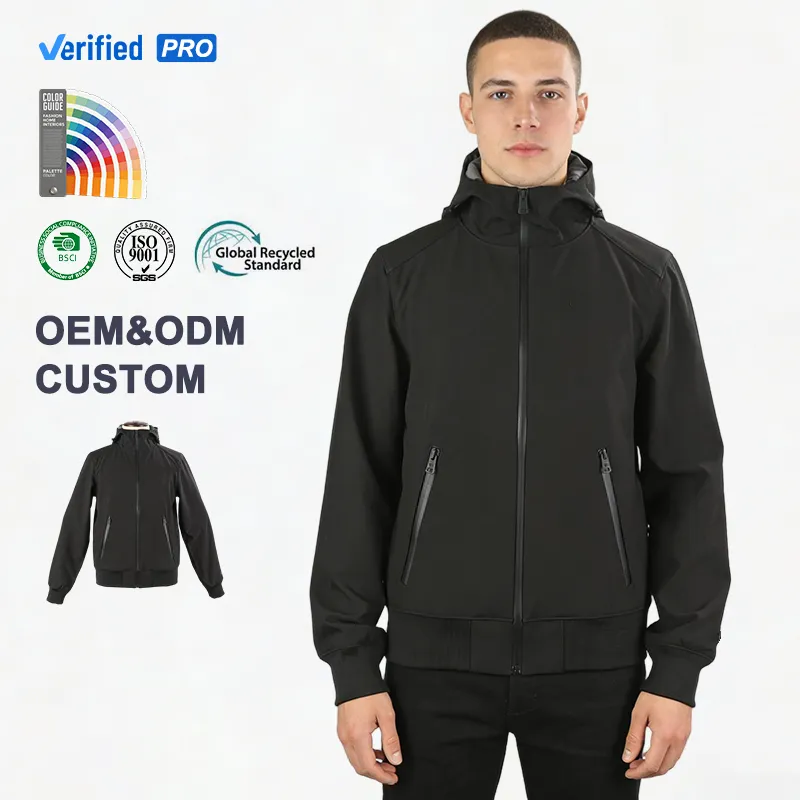
Unmatched Breathability and Moisture Management for Sustained Effort
How Softshell Fabrics Enable Real-Time Evaporative Cooling
During intense aerobic activity, the body produces significant perspiration that must be efficiently transported away from the skin to prevent overheating and discomfort. Softshell fabrics achieve this through a sophisticated combination of tightly woven face textiles—often treated with a durable water repellent (DWR) finish—and a diffusion layer that promotes rapid moisture vapor transmission. Unlike traditional waterproof-breathable membranes reliant on microporous structures, softshells use an open, air-permeable construction that sheds light precipitation while enabling continuous airflow. This design delivers a high Moisture Vapor Transmission Rate (MVTR), often exceeding 20,000 g/m²/24hrs in leading models, supporting real-time evaporative cooling. As sweat vapor passes through the fabric, it dissipates instantly, pulling heat from the microclimate next to the skin. This continuous exchange prevents liquid moisture buildup—keeping athletes dry and cool during prolonged efforts like trail running or ski touring. Advanced softshells further enhance wicking with hydrophobic inner surfaces that spread moisture across a broader area, accelerating evaporation and stabilizing core temperature to sustain higher output.
Avoiding the Clammy Sauna Effect: Comparative Data vs. Hardshells and Fleece
A common complaint among outdoor athletes is the “clammy sauna” sensation caused by trapped perspiration. Traditional hardshell jackets—excellent at blocking rain—often sacrifice breathability, leading to internal condensation that soaks base and mid-layers. Fleece, though insulating, readily absorbs sweat and loses thermal efficiency when damp. In contrast, softshell jackets balance wind resistance and vapor permeability to maintain a drier internal environment. The table below highlights key performance differences:
| Garment Type | Typical MVTR (g/m²/24hrs) | Internal Humidity After 30 min High-Intensity Activity | Perceived Clamminess Rating |
|---|---|---|---|
| Softshell Jacket | 18,000 – 25,000 | 45–55% RH | Low |
| Hardshell (3-layer) | 5,000 – 12,000 | 75–90% RH | High |
| Fleece Mid-layer | 8,000 – 15,000* | 60–80% RH | Moderate |
*When worn as an outer layer; fleece has no wind resistance, so breathability is high but moisture can accumulate in the fabric.
Controlled lab tests show softshell jackets reduce internal relative humidity by up to 40% compared to hardshells—directly preventing the sticky, chilled discomfort that derails endurance. For climbing—where grip, precision, and mental focus are paramount—a softshell’s ability to expel moisture while blocking wind maintains comfort and concentration without the distraction of a saturated mid-layer.
Dynamic Mobility and Ergonomic Design for Athletic Movement
4-Way Stretch Integration and Articulated Seaming in High-Performance Softshell Jackets
Softshell jackets are engineered with 4-way stretch fabrics that elongate equally in horizontal and vertical planes—matching the body’s multidirectional movement during high-intensity sports. Unlike rigid hardshells, these materials allow unrestricted reaching, twisting, and bending. A 2022 study by the Textile Performance Lab found that 4-way stretch softshells reduced upper-body muscular exertion by 18% during repetitive overhead motions compared to standard 2-way stretch jackets. Articulated seaming enhances ergonomics further by pre-shaping sleeves and shoulders to mirror the natural resting angle of the arm—eliminating excess fabric bunching at the elbows and preventing seam bite during dynamic motion. Leading manufacturers now use 3D body-mapping scans to position seams along non-abrasive zones, ensuring every stitch supports—not hinders—movement. The result is a jacket that functions like a second skin: essential for sports where fractions of a second or a single hold define success.
Range-of-Motion Gains Measured in Climbers and Ski Tourers
Field testing confirms measurable mobility advantages. In a 2023 biomechanics analysis, climbers wearing a softshell jacket demonstrated a 12% increase in shoulder abduction and a 15% improvement in hip flexion versus those in a traditional hardshell—translating directly to greater reach and more efficient high steps. For ski tourers, the jacket’s dynamic stretch enables a fluid, consistent stride during uphill skinning, where coordinated arm and torso motion is critical. A winter sports trial recorded a 9% reduction in perceived exertion and a 7% faster ascent time when subjects wore softshells instead of insulated mid-layers under hardshells. These gains stem from the jacket’s ability to stretch in sync with the athlete—eliminating energy-sapping resistance and preserving form over long, demanding efforts.
Smart Weather Protection: Wind Resistance Without Compromising Ventilation
Softshell jackets uniquely balance wind protection and ventilation—something traditional hardshells often sacrifice. Where hardshells rely on impermeable membranes that drop air permeability to near zero (<1 CFM), softshells use tightly woven face textiles or microporous layers to cut wind penetration by 80–90% while maintaining breathable airflow of 5–10 CFM (Outdoor Industry Association, 2023). This measured resistance prevents wind chill without trapping moisture vapor—avoiding the internal condensation that leads to rapid, uncontrolled cooling. The result is a responsive microclimate: athletes stay warm during gusts yet remain cool during sustained effort—making softshells ideal for variable-weather pursuits like alpine running or ski touring.
Adaptive Thermal Regulation Across Aerobic Sports and Conditions
Layering Efficiency: Why Softshell Jackets Outperform Mid-Layers in Trail Running and Bike Commuting
In high-output activities like trail running and bike commuting, precise thermal regulation is essential. A softshell jacket functions as a unified layer—replacing the need for separate wind shells and insulating mid-layers. Its integrated breathability allows excess heat to escape while blocking wind chill, reducing bulk and minimizing overheating risk. By contrast, a traditional fleece mid-layer under a hardshell traps moisture, creating a clammy microclimate that forces the body to work harder to cool down. A 2022 study in Applied Physiology found athletes wearing a single softshell jacket maintained a more stable core temperature and expended 7% less energy than those using layered systems. The outcome is a more efficient, comfortable experience—without constant zipper adjustments or mid-ride layer changes.
Proven Cross-Sport Versatility for Outdoor Athletes
Softshell jackets deliver exceptional cross-sport versatility, allowing athletes to transition seamlessly between disciplines—from morning trail runs to afternoon bouldering sessions or variable-weather bike commutes. Their balanced blend of breathability, dynamic stretch, and wind resistance eliminates the need for multiple specialized layers. Climbers value the unrestricted mobility that supports dynamic reaches; skiers appreciate the jacket’s ability to shed light snow and block wind without overheating; trail runners benefit from its lightweight responsiveness and moisture control. This all-in-one functionality reduces gear clutter and simplifies packing for multi-sport adventures. For athletes who train and explore across disciplines, a well-designed softshell is a reliable, high-performance investment—proven to perform consistently wherever the terrain and conditions take them.
FAQ
What is Moisture Vapor Transmission Rate (MVTR)?
MVTR is a measure of how efficiently a fabric wicks and transmits moisture vapor. It is expressed in grams per square meter per 24 hours (g/m²/24hrs). High MVTR ratings, like 20,000 g/m²/24hrs, indicate excellent breathability and evaporative cooling performance.
How do softshell jackets compare to traditional hardshells?
Softshell jackets prioritize breathability, dynamic stretch, and moisture management, offering better mobility and comfort during aerobic sports. Hardshells focus on waterproofing, but their rigid membranes often sacrifice breathability and result in internal condensation.
Can softshell jackets be used in rainy conditions?
While softshell jackets shed light rain and snow effectively, they are not fully waterproof. For prolonged exposure to heavy rainfall, a hardshell jacket may be more suitable.
Are softshell jackets suitable for all outdoor sports?
Yes, softshell jackets are versatile and perform well in various outdoor sports, including trail running, climbing, skiing, and bike commuting, especially in cool, variable-weather conditions.
Why is 4-way stretch important in softshell jackets?
4-way stretch fabric enhances mobility by elongating equally in both horizontal and vertical directions. This ensures unrestricted movement during sports like climbing or ski touring, reducing exertion and fatigue.
Table of Contents
- Unmatched Breathability and Moisture Management for Sustained Effort
- Dynamic Mobility and Ergonomic Design for Athletic Movement
- Smart Weather Protection: Wind Resistance Without Compromising Ventilation
- Adaptive Thermal Regulation Across Aerobic Sports and Conditions
- Proven Cross-Sport Versatility for Outdoor Athletes
- FAQ
