 EN

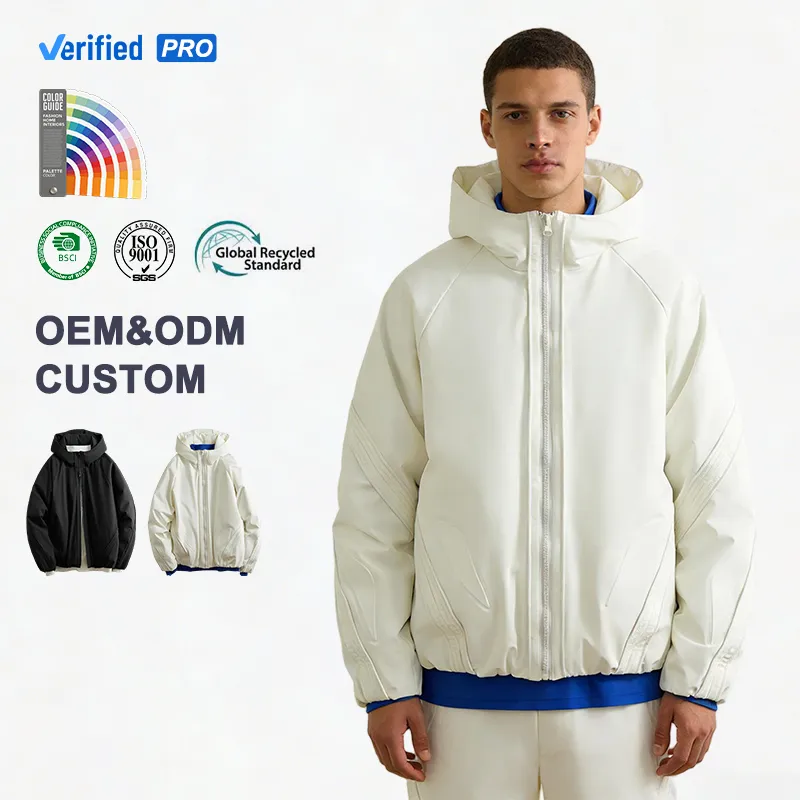
Defining the Terms: Down Jacket vs. Puffer Jacket
Down jackets are insulated with the soft, fluffy under-feathers (down) plucked from ducks or geese. These natural clusters trap air, delivering an exceptional warmth-to-weight ratio for cold, dry conditions. A puffer jacket, by contrast, is defined not by its fill but by its quilted construction—stitched-through compartments, or baffles, that keep insulation evenly distributed. The term “puffer” encompasses any jacket with that signature segmented silhouette, and the fill can be down, synthetic fibers (e.g., polyester), or a hybrid blend. In everyday conversation, many shoppers assume a puffer contains synthetic insulation, reserving “down jacket” for the natural version. That’s a simplification—but it highlights a key truth: every down jacket is a puffer, yet not every puffer uses down. This distinction matters, because fill material fundamentally alters water resistance, packability, and price.
Insulation Performance: Down vs. Synthetic in Key Metrics
Warmth-to-weight ratio and compressibility
High-quality down delivers an outstanding warmth-to-weight ratio by trapping body heat in countless tiny air pockets within natural clusters. Fill power—a measure of loft—directly reflects this efficiency: 800+ fill power down provides more insulation per gram than lower grades, making top-tier down garments the lightest choice for serious cold. Their compressibility is equally remarkable; a premium down jacket can be packed into a small stuff sack and still regain full loft within minutes. Synthetic fills, even advanced sheet-style insulations, require more mass to match the loft and warmth of high-fill-power down—resulting in bulkier packed profiles and heavier garments for equivalent thermal performance.
| Metric | Down Insulation | Synthetic Insulation |
|---|---|---|
| Warmth‑to‑weight ratio | Excellent – highest loft per gram | Moderate – improving with new fibres |
| Compressibility | Very high – packs small, loft rebounds | Moderate – more bulk for equal warmth |
| Weight for equivalent warmth | Lightest option | Often heavier |
Moisture resilience and recovery in humid or wet conditions
Synthetic insulation excels in damp environments. Engineered polyester fibers retain structure and insulating ability even when soaked, maintaining up to 70–80% of original warmth and drying significantly faster than down. Untreated down collapses when wet, losing nearly all insulating power and requiring hours to fully dry. While DWR-treated down improves water resistance, it doesn’t eliminate this vulnerability. In maritime climates, for hikers facing coastal drizzle, or urban commuters navigating slushy streets, synthetic puffers offer more dependable all-day performance—especially during high-output activity where sweat buildup is inevitable.
Practical Selection Guide: Matching a Down Jacket or Puffer to Your Needs
Ideal use cases for a down jacket: cold-dry climates, weight-sensitive activities
Down jackets excel in cold, dry environments where their unmatched warmth-to-weight ratio and compressibility become decisive advantages. The lofty clusters trap large volumes of air relative to mass, delivering superior insulation without burdening the wearer. For high-altitude mountaineering, polar expeditions, or long-distance trekking—where every gram and cubic centimeter of pack space counts—down remains the gold standard. It performs reliably as an outer layer in crisp air or as a midlayer under a shell. In consistently cold, arid cities, it also serves as a lightweight, highly efficient everyday outer layer—ideal for those prioritizing thermal efficiency and mobility over wet-weather versatility.
When a synthetic puffer jacket is the smarter choice: urban life, ethical preferences, and variable weather
Synthetic puffer jackets shine where conditions turn damp, unpredictable, or ethically complex. Their continuous-filament insulation retains warmth when wet, so sudden rain, wet snow, or humidity won’t compromise performance. This makes them ideal for commuters, coastal hikers, and anyone navigating spring/fall transitions. They’re also easier to care for—most can be machine-washed without specialized drying—and fully animal-free, aligning with vegan lifestyles or ethical concerns about waterfowl sourcing. Advances in recycled polyester further support sustainability goals. With greater durability, lower maintenance, and strong value across seasons, synthetic puffers serve as resilient, low-hassle workhorses for daily life.
Durability, Care, and Long-Term Value of Down Jackets and Puffer Jackets
Longevity hinges on both material resilience and care requirements. Down jackets demand careful handling: moisture exposure or improper washing can cause clusters to clump, permanently degrading loft and warmth. Shell fabric denier (D) directly affects durability—an ultralight 10D face fabric trades tensile strength for minimal weight, while a 40D shell offers abrasion resistance at the cost of added bulk. Synthetic puffer jackets typically withstand rougher use: their insulation recovers more reliably from repeated compression, and most tolerate machine washing and standard drying without special techniques. This lower maintenance overhead makes synthetics especially practical for daily urban wear. While a well-cared-for down jacket can retain exceptional performance for years, the synthetic puffer’s combination of resilience, ease of care, and consistent reliability often delivers stronger long-term value for users who prioritize simplicity and adaptability.
FAQ
What is the difference between a down jacket and a puffer jacket?
A down jacket is specifically insulated with natural down feathers from birds like ducks or geese, while a puffer jacket refers to quilted outerwear with a segmented look. The fill material in a puffer can be down, synthetic insulation, or a blend of both.
Is synthetic insulation better than down in wet conditions?
Yes, synthetic insulation performs better in wet or humid environments. It retains its insulating properties even when soaked, unlike untreated down, which collapses and loses warmth.
Which jacket type is lighter for cold, dry climates?
Down jackets are lighter due to their superior warmth-to-weight ratio and compressibility, making them ideal for cold and dry conditions.
Are synthetic puffer jackets eco-friendly?
Many synthetic puffers incorporate recycled polyester, aligning with sustainability goals. They are also vegan, avoiding the use of animal-sourced materials.
How can I care for a down jacket?
Down jackets require careful washing and drying to avoid damage. Use a front-loading washer with a gentle cycle and a specialized down detergent, followed by low-heat drying with dryer balls to restore loft.
