 EN

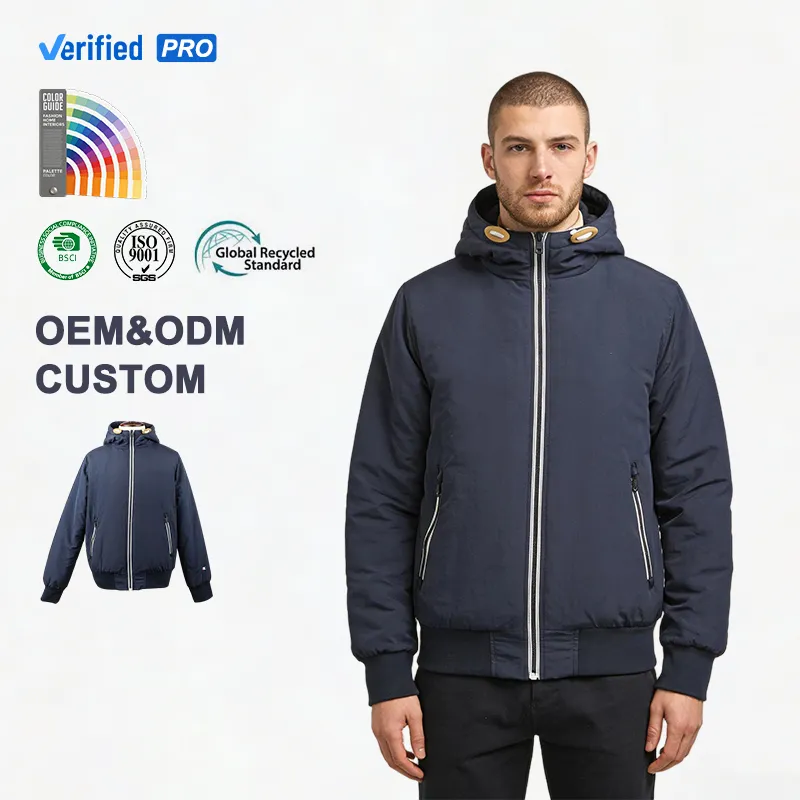
Ergonomic Fit for Cycling and Transit Mobility
Urban riders need a windbreaker jacket that adapts to forward-leaning postures, overhead reaches, and layered outfits. Two fit priorities define this: extended back coverage and sleeve articulation.
Extended Back Coverage and Articulated Sleeves for Bike Posture
When you lean forward on a bike, a standard jacket rides up at the waist and pulls at the shoulders. Extended back coverage solves this by adding 3–5 cm of length at the rear hem compared with the front. The dropped tail keeps the lower back covered during aggressive cycling posture—and when bending to lock a bike—making it especially useful for e-bike riders who maintain a forward-leaning but less aggressive position. Articulated sleeves complement this by pre-curving the fabric at the elbow to match the natural bend of the arm on the handlebar. This reduces shoulder strain and prevents cuffs from sliding toward the wrist. In transit, the same pattern supports overhead rail grabs or turn signals without tightening across the shoulder blades. A well-cut urban shell avoids excess torso volume so it layers cleanly under a backpack strap. Look for panels that curve along the spine and underarms—these deliver a close but non-restrictive fit. Together, extended rear coverage and articulated sleeves keep the jacket stable from saddle to station.
Sleeve Length and Shoulder Mobility for Handlebar Reach and Layering
Sleeve length must be tested in the riding position—not upright—because hands resting on the handlebar shift the arm’s angle dramatically. Cuffs should cover the wrist bone and part of the glove; too short invites cold air at the forearm, while too long bunches at the brake lever. Shoulder mobility hinges on armhole depth and shell stretch. A gusseted underarm or raglan-style sleeve enables full reach without lifting the hem—critical when layering over a sweater or light down vest. The outer shell needs enough room to slide smoothly over mid-layers, but not so much that it flaps or flattens in the wind. For commuters carrying panniers or wearing crossbody bags, this design also minimizes friction at the neck and upper back. Test fit by mimicking both a handlebar reach and a two-handed overhead stretch: the jacket should stay anchored at the hem. Thoughtful sleeve and shoulder engineering transforms a casual shell into a reliable commuting layer.
Wind Resistance Engineering for Real-World Commuting Speeds
Vertical Wind Baffles and Aerodynamic Paneling at 15–25 km/h
At typical urban cycling speeds of 15–25 km/h, apparent wind amplifies even small gaps—causing chest chill and sleeve flutter. Vertical wind baffles behind the front zipper act as an inner flap, redirecting airflow before it reaches the torso. Aerodynamic paneling on shoulder caps and upper sleeves smooths airflow over the body, reducing drag without compromising flexibility. In controlled wind-tunnel comparisons, jackets with vertical baffles and contoured shoulder panels cut air penetration by 38% at 20 km/h versus basic nylon shells (Textile Engineering Review, 2023). Since most commuters ride precisely within this speed range—where aerodynamic noise and fabric buffeting are constant—the ideal windbreaker uses a 40–60 denier tightly woven face fabric on windward panels, paired with stretch-knit back panels for mobility. Paneling should remain subtle: extreme aero shaping adds cost and discomfort for stop-and-go urban riding. The result is stable thermal protection that supports relaxed posture and consistent cadence.
Dual-Lock Cuffs and Adjustable Hem to Eliminate Flapping
Flapping sleeves and a loose hem create noise, cold drafts, and distraction over a 30-minute commute. Dual-lock cuffs pair a wide hook-and-loop strap with an inner elastic gaiter, delivering two secure seal points around gloves or bare wrists. An adjustable hem with cord locks at each hip lets riders cinch the lower edge after layering. Field tests show dual-lock cuffs reduce sleeve flutter by 42% compared with plain elastic cuffs at 22 km/h (Commuter Gear Lab, 2024). A hem pulled close to the hip bones blocks upward air entry—keeping the core warm without binding—and allows one-handed adjustment, so riders can vent or seal while waiting at traffic signals. This design also prevents the jacket from riding up under a backpack, maintaining lower-back coverage during aggressive handlebar reaches.
Balancing Waterproofing, Breathability, and Visibility
20K mm vs. 5K mm + Mesh Venting: Comfort Tradeoffs for 30-Minute Rides
A windbreaker jacket with a 20K mm hydrostatic head rating blocks heavy rain effectively—but often at the expense of breathability. Moisture vapor transmission (measured in grams per square meter per 24 hours) typically ranges from 10,000 g to 30,000 g in professional-grade shells (2024 industry data). During a 30-minute urban ride, cyclists generate significant heat and sweat; if the membrane traps vapor, the interior feels clammy—even without external leaks. In contrast, a 5K mm shell with strategic mesh venting—such as underarm panels or a mesh-lined back yoke—allows greater airflow while handling moderate showers. The tradeoff is clear: high waterproof ratings favor prolonged downpours, while lower-rated membranes with mechanical venting prioritize sustained comfort at commuting speeds. A smart solution pairs a mid-range membrane (e.g., 10K mm) with pit zips or mesh-lined pockets for dynamic climate control.
Reflective Elements and High-Visibility Panels for Low-Light Safety
Urban commutes frequently occur at dawn, dusk, or night—when visibility drops sharply. A windbreaker with 360-degree reflective elements helps drivers spot you from every angle, directly lowering collision risk. High-visibility panels on the chest, back, and sleeves increase contrast against traffic and remain effective in rain, where headlights scatter on wet fabric. For a 30-minute ride, prioritize large retroreflective strips or bold high-vis color blocking—not just narrow piping. Subtle reflective piping along shoulders and hems adds brightness without compromising the jacket’s urban aesthetic. Without such features, a dark shell can vanish in rainy twilight.
Packability and Portability for Multi-Modal Commuters
Sub-200g Weight and Stuffable Design for Seamless Transit Integration
A windbreaker under 200g disappears into a backpack, pannier, or messenger bag without adding noticeable bulk. The most practical designs stuff into their own chest or back pocket, compressing to roughly the size of a 500ml bottle. That compactness matters for multi-modal commuters transitioning from bike to train to walking: a packable jacket deploys in seconds when wind picks up—and stows just as quickly before boarding crowded transit. Lightweight 15–20 denier ripstop nylon strikes a proven balance of tear resistance, compressibility, and wind protection. Avoid stiff brims, heavy zippers, or bulky liners that resist compression; smooth coil zippers and elastic bindings minimize packed volume. A carabiner loop or internal strap lets the stuffed jacket clip outside a bag—preserving interior space for work essentials. This seamless portability keeps transitions fast, efficient, and friction-free.
FAQ
1. What is the significance of extended back coverage and articulated sleeves?
The extended back coverage prevents the jacket from riding up during a forward-leaning cycling posture, while articulated sleeves reduce shoulder strain and prevent cuffs from sliding toward the wrist.
2. Why is sleeve length important for cycling jackets?
Sleeve length ensures that the cuffs cover the wrist bone during cycling to prevent cold air from entering while avoiding bunching at the brake lever.
3. How does vertical wind baffle design enhance wind resistance?
Vertical wind baffles behind the front zipper redirect airflow, reducing chest chills and sleeve flutter caused by apparent wind at cycling speeds.
4. What waterproofing level is ideal for urban cycling?
A mid-range 10K mm hydrostatic head rating with ventilation features balances waterproofing and breathability for commuter rides in varying conditions.
5. Why are reflective elements critical in a cycling jacket?
Reflective elements improve visibility in low-light conditions, enhancing safety during dawn, dusk, or nighttime commutes.
6. How does packability benefit multi-modal commuters?
A lightweight and stuffable windbreaker can easily fit into a backpack or bag, making transitions between riding, walking, or using public transport seamless and convenient.
