 EN
EN

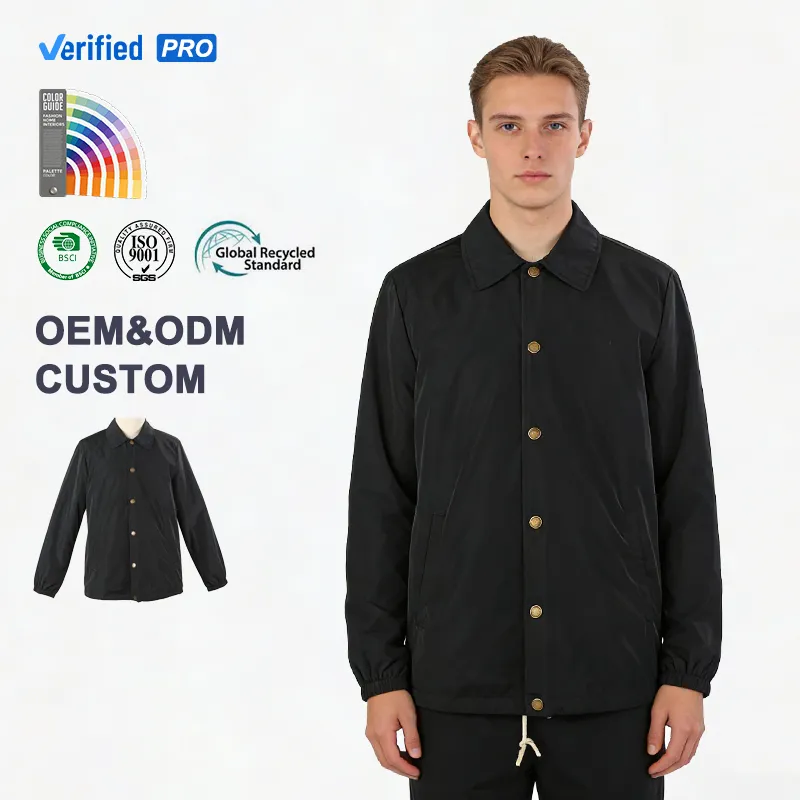
The Origins and Defining Features of the Coach Jacket
The coach jacket began as a utilitarian garment for American football coaches, providing a lightweight, wind-resistant layer ideal for autumn sideline duty. Its boxy, hip-length cut allowed unrestricted movement and easy layering over bulky team sweatshirts—making it both functionally essential and a natural canvas for school or franchise branding.
Sportswear Roots: 1950s–60s Collegiate Utility and Sideline Practicality
By the 1950s, the coach jacket had become standard issue across college and professional football programs—not just for coaches, but for players, staff, and fans. Distributed widely, it doubled as athletic gear and mobile brand signage. Function drove form: the snap-front closure enabled quick on-and-off access during fast-paced games; the loose fit accommodated padding and movement; and its minimal insulation made it perfectly suited to the 50–70°F conditions typical of fall football. Though eclipsed by more technical outerwear in the 1970s, its legacy as a foundational sportswear piece was already secure.
Signature Design Elements: Snap Front, Drawstring Hem, Chamois Lining, and Nylon-Cotton Blends
Four functional details define the coach jacket’s enduring silhouette. A full-length snap front—replacing zippers or buttons—ensures one-handed operation and a clean, uninterrupted line. An adjustable drawcord hem allows wearers to trap warmth or enhance ventilation with a simple tug. Inside, a soft cotton-chamois lining (often in a contrasting color) adds comfort and light insulation without bulk. The shell is typically a tightly woven nylon or nylon-cotton blend, engineered for light water repellency and breathability. Two patch pockets, a spread collar, and elastic cuffs complete the design—disciplined, unadorned, and unchanged for decades. That consistency is precisely why the coach jacket remains instantly recognizable—and endlessly adaptable.
Functional Engineering for Transitional Weather
Wind Resistance, Light Water Repellency, and Ideal 50–70°F Performance
The coach jacket’s tightly woven nylon-cotton shell effectively blocks wind that would penetrate knit layers, making it a reliable shield on breezy spring or autumn days. Many versions feature a durable water-repellent (DWR) finish, causing light rain to bead and roll off rather than soak through—keeping the core dry without the weight or rigidity of a full rain shell. Lab testing confirms these fabrics strike a practical balance: air permeability rates of 2–5 cfm (cubic feet per minute) for a 50-denier nylon blend allow sufficient breathability to prevent overheating while maintaining wind resistance. As intended, the jacket performs optimally in the 50–70°F range—where a single mid-weight layer underneath delivers just enough insulation. Above 70°F, the absence of pit zips can cause heat buildup, but for cool mornings and mild afternoons—especially when temperatures fluctuate—the design delivers precise, responsive coverage.
Ergonomic Details: Elastic Cuffs, Spread Collar, and Adjustable Drawcord Hem
Elastic cuffs seal snugly at the wrist to block drafts while staying out of the way during active use. The structured spread collar—often lined with chamois or microfleece—can be worn upright to shield the neck from wind or folded down for a cleaner profile. Paired with the adjustable drawcord hem, these features create a customizable microclimate: the collar and hem manage vertical airflow, while the cuffs control horizontal intrusion. Together, they transform the jacket into a lightweight, responsive layer—ideal for transitional weather when conditions shift multiple times in a single day.
Coach Jacket Style Evolution Across Eras and Subcultures
1990s Streetwear Revival and Hip-Hop’s Embrace of Utility-Driven Cool
The coach jacket’s pivot from sideline staple to cultural icon was cemented in the 1990s. Adopted by streetwear brands, skaters, and hip-hop artists—including influential groups like NWA—the jacket resonated for its affordability, durability, and blank-slate versatility. Its boxy shape, originally designed to accommodate pads and layered uniforms, aligned perfectly with the era’s oversized silhouettes and bold branding strategies. A leading athletic brand’s 1992 catalog recorded a 300% surge in direct-to-consumer orders for team-branded outerwear, signaling a decisive shift: the coach jacket was no longer just team-issued gear—it was a public fashion statement rooted in authenticity and utility.
Modern Reinvention: Designer Collaborations, Oversized Fits, and Gender-Neutral Appeal
Today, the coach jacket has been fully reimagined beyond its sportswear origins. High-fashion houses regularly reinterpret it on the runway—collaborating with heritage sportswear manufacturers to fuse classic structure with premium materials like Japanese technical satin or waxed cotton. The modern silhouette leans intentionally oversized, using proportion to achieve a contemporary, gender-neutral aesthetic. This evolution transforms the jacket into a dynamic layering piece: equally at home over a hoodie and cargo pants or draped over a midi dress to add utilitarian contrast. Its clean lines and lack of ornamentation make it an ideal vehicle for texture, color, and subtle detail—ensuring its relevance in wardrobes that value both self-expression and functional intelligence.
Styling the Coach Jacket: Effortless Versatility from Casual to Curated
The coach jacket thrives as a foundational outer layer—equally effective in relaxed weekend outfits and more intentional ensembles. Its boxy cut accommodates everything from a simple t-shirt to a thick crewneck or hoodie, while its lightweight, wind-resistant construction adds quiet functionality. Pair it with jeans, chinos, or corduroys for balanced, low-effort polish—or elevate it with tonal layering and considered proportions. For maximum adaptability, opt for a neutral tone in a classic nylon-cotton blend: it bridges casual utility and curated presentation without compromise.
Frequently Asked Questions
What makes the coach jacket suitable for transitional weather?
The coach jacket is crafted with a tightly woven nylon-cotton shell that blocks wind and features water-repellent properties. These qualities keep you comfortable in temperatures ranging from 50–70°F.
How do modern designer collaborations enhance the coach jacket?
Modern designer collaborations fuse the classic structure with premium materials such as Japanese technical satin or waxed cotton, creating a contemporary, versatile aesthetic while preserving its utilitarian roots.
Can the coach jacket be worn for both casual and curated styling?
Yes, the coach jacket’s clean design makes it adaptable for casual outfits with jeans or chinos as well as curated layers for a polished look.
What is the significance of features like the snap front and adjustable drawcord hem?
These features offer functional utility, allowing for easy on-and-off wear, adjustable warmth, and ventilation, making the jacket highly practical.
