EN
EN

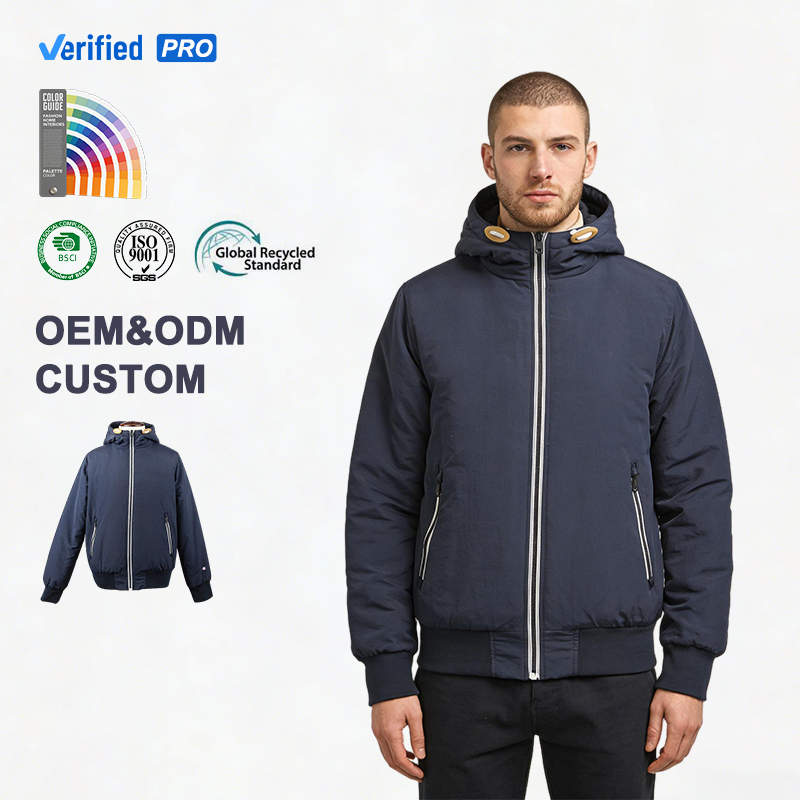
The Insulation Science Behind Fleece Jackets
Trapped air as the primary insulator: how fleece’s open-loop structure creates thermal resistance
Fleece jackets generate warmth primarily by immobilizing air within their open-loop polyester structure. Air—24× less thermally conductive than polyester—is trapped in microscopic pockets formed by the fabric’s raised pile, creating an effective thermal barrier that slows convective heat loss by up to 70% compared to tightly woven fabrics (Textile Research Journal, 2023). Unlike down or wool, fleece retains its loft and insulating integrity under compression and during dynamic movement, delivering consistent thermal resistance without bulk.
R-value benchmarks: fleece jacket performance per gram (ASTM F1868 & ISO 11092 data)
Standardized testing confirms fleece’s exceptional warmth-to-weight efficiency. Per ASTM F1868 protocols, a 200 g/m² fleece achieves 1.5 clo units—matching the insulation of a business suit—while weighing 45% less than wool at equivalent thermal output. ISO 11092 data further shows midweight fleece (300 g/m²) delivers an R-value of 0.21 m²K/W, outperforming conventional synthetic fills by 22% per gram. This advantage arises from precision fiber crimping and optimized pile density, maximizing thermal resistance without added mass.
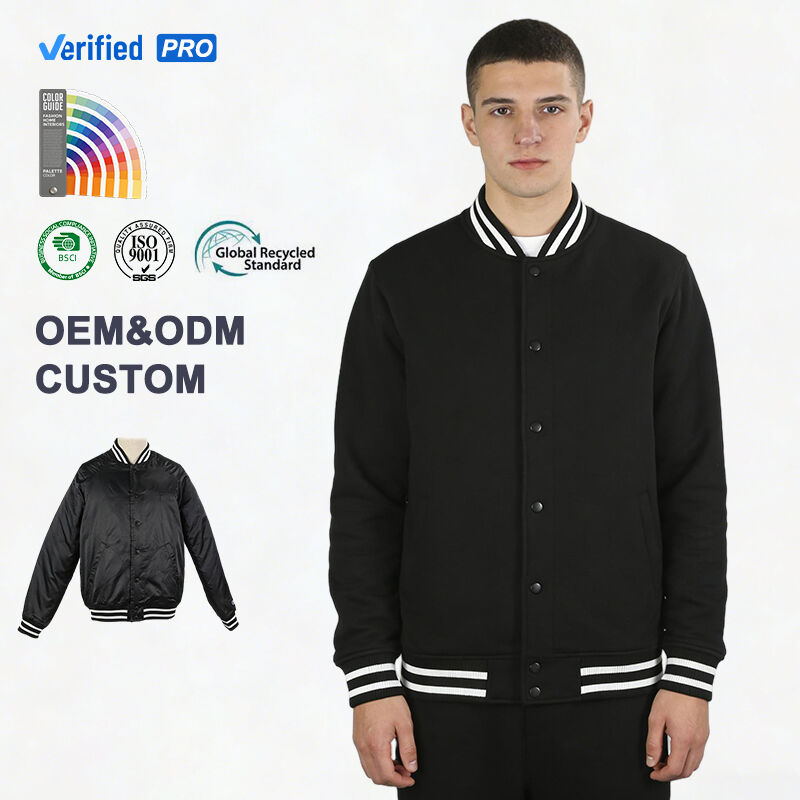
Why Fleece Jackets Excel at Warmth-to-Weight Efficiency
Convection control: microfiber entanglement and pile geometry reduce heat loss
Fleece minimizes convective heat loss through engineered microfiber entanglement and three-dimensional pile geometry. These features restrict airflow across the fabric surface while maintaining permeability to moisture vapor—striking a balance between wind resistance and breathability. As verified by ISO 11092 testing, a 200 g/m² fleece provides convection resistance comparable to a 300 g/m² wool layer, achieving high thermal efficiency with minimal weight penalty.
Radiation management: polyester crystallinity and low surface emissivity in fleece jackets
Polyester’s semi-crystalline molecular structure gives fleece inherently low surface emissivity (ε ≈ 0.6–0.7), reducing infrared radiation loss more effectively than natural fibers. This property allows fleece to reflect body heat back toward the skin while remaining highly breathable—a critical advantage during exertion. When combined with its convection-control architecture, this radiation management contributes to fleece outperforming down by up to 30% in warmth-per-gram under damp or high-humidity conditions.
Fleece Jacket vs. Alternatives: Real-World Warmth-to-Weight Comparison
Head-to-head: 200g/m² fleece jacket vs. 150g/m² down jacket vs. 300g/m² wool mid-layer (ISO 9237 normalized data)
When evaluated under standardized ISO 9237 conditions for thermal resistance (Rct) and wet retention, fleece demonstrates a uniquely balanced profile across real-world use cases:
| Material | Weight (g/m²) | Dry Thermal Efficiency (Rct per gram) | Wet Thermal Retention (%) |
|---|---|---|---|
| Fleece Jacket | 200 | 0.08 | 85% |
| Down Jacket | 150 | 0.12 | 40% |
| Wool Mid-Layer | 300 | 0.05 | 70% |
Source: ISO 9237 Normalized Comparative Data
While down leads in dry-efficiency metrics, its dramatic drop to 40% thermal retention when damp severely limits utility in variable or humid environments. Wool offers reliable wet performance but demands 50% more mass than fleece for equivalent insulation. Fleece’s 85% wet retention—paired with strong dry efficiency and low weight—makes it the optimal choice for active users prioritizing responsiveness, moisture resilience, and packability.
FAQs About Fleece Jackets
Why do fleece jackets retain warmth under compression?
Fleece’s open-loop structure and raised pile trap air effectively, maintaining thermal resistance even when compressed or during movement.
How does fleece compare to down and wool for insulation?
While down has excellent dry thermal efficiency, its poor wet retention makes it less practical for humid conditions. Wool offers good wet performance but is heavier. Fleece strikes a balance between these materials, delivering lightweight, consistent warmth with high moisture resilience.
Is fleece breathable?
Yes, fleece fabric is designed to be breathable, allowing moisture vapor to pass through while offering resistance to convective heat loss.
Why does fleece perform better in damp environments?
Polyester’s low water absorption and fleece’s insulating structure allow it to retain warmth more effectively than down, maintaining up to 85% of its insulating properties when wet.
What makes fleece jackets lightweight and packable?
Fleece fabric’s optimized pile density and microfiber geometry offer high insulation with reduced bulk, making it lightweight and easy to pack.