 EN
EN

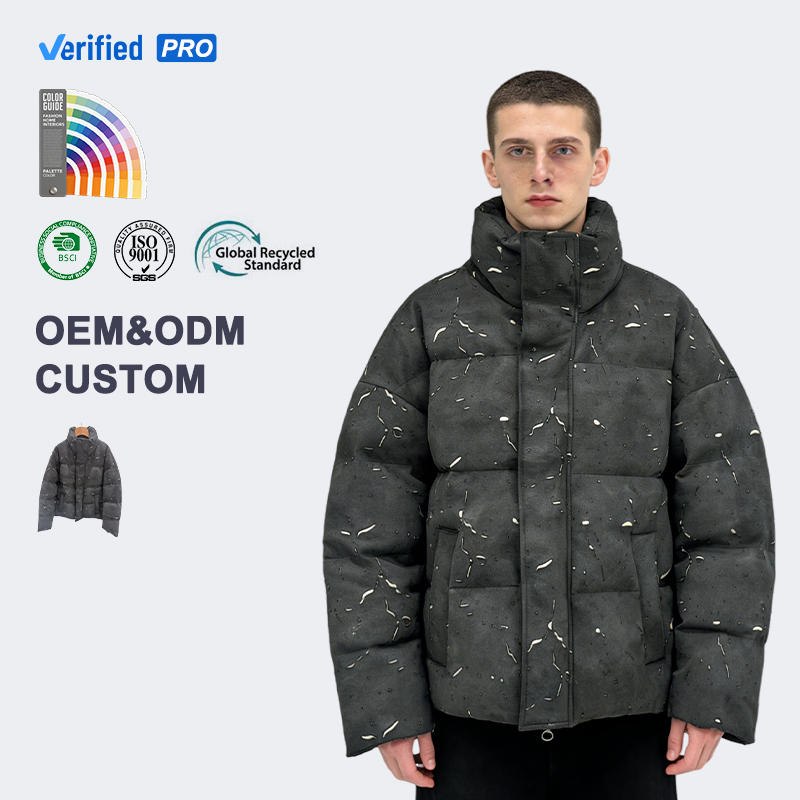
What Makes a Winter Jacket Lightweight Yet Warm?
Decoding Warmth-to-Weight Ratio: The Core Metric for Smart Winter Jacket Selection
The warmth-to-weight ratio measures how much heat a jacket retains per unit of weight—a critical metric for choosing a lightweight winter jacket that doesn’t sacrifice thermal performance. This efficiency stems from insulation’s ability to trap still air, the body’s natural heat barrier. Premium down, for example, forms thousands of tiny air pockets that dramatically slow conductive and convective heat loss. According to the 2023 Outdoor Industry Association report, an 800-fill-power down jacket can be 25% lighter than a 600-fill model while delivering equivalent warmth. Shell fabric and construction also influence weight: ultralight ripstop nylon and sewn-through baffles reduce mass without compressing insulation. When evaluating jackets, prioritize both fill power and total weight—high fill power in a low overall weight signals elite warmth-to-weight performance.
Fill Power, Loft, and Advanced Synthetics: Why 800+ Fill Down and Bio‑Based Insulations Lead the Category
Fill power quantifies the volume (in cubic inches) one ounce of down occupies—and directly reflects cluster size, resilience, and loft potential. Jackets with 800-fill or higher use larger, more durable clusters that recover quickly after compression, sustaining insulating air pockets over time. However, down loses up to 90% of its warmth when wet. That’s where next-generation synthetics excel: bio-based, 100% recycled options replicate down’s loft and compressibility while retaining thermal performance in damp conditions. Engineered ultra-fine fibers create millions of stable air pockets, achieving a warmth-to-weight ratio comparable to 600–650-fill down. Some are also designed to biodegrade under specific environmental conditions—addressing microplastic concerns without compromising function. For dry cold, 800+ fill down remains unmatched; for wet, variable urban winters, advanced synthetics offer reliable, low-bulk warmth.
Down vs. Synthetic Insulation in Real-World Winter Jacket Use
Cold-Dry vs. Cold-Wet Conditions: How Insulation Type Impacts Actual Warmth in Urban Winter Environments
In city commuting, insulation choice directly affects real-world comfort. Down excels in cold, dry air—its high loft traps heat efficiently—but collapses when saturated, losing nearly all insulating capacity. Synthetic insulation, typically made from engineered polyester fibers, resists moisture absorption and retains significant warmth even when damp, drying faster and holding loft better in rain, sleet, or slush. For urban dwellers facing drizzly mornings or snowmelt on sidewalks, synthetic-filled jackets deliver consistent, predictable warmth. Down remains the gold standard for frigid, dry days—but only when paired with robust water-repellent shell treatments and careful usage. The right choice hinges on your climate’s dominant moisture profile—not just temperature.
Strategic Layering to Amplify Warmth Without Adding Bulk
The Three-Layer System: Base, Mid, and Lightweight Winter Jacket as the Final Defense
Efficient cold-weather dressing relies on the three-layer system: a moisture-wicking base layer (e.g., merino wool), a heat-trapping mid-layer (like fleece or a lightweight down sweater), and a protective outer shell—the lightweight winter jacket. Modern shells combine advanced membranes and durable water-repellent (DWR) coatings to block wind and light precipitation while permitting moisture vapor to escape. This synergy reduces bulk significantly: a thin merino base, compressible synthetic mid-layer, and 800-fill down jacket can match the warmth of a heavy parka. As confirmed by the US Army Research Institute of Environmental Medicine (2022), layered systems reduce convective heat loss by up to 40% compared to single-layer garments. Adjusting layers lets you fine-tune warmth across activity levels and fluctuating temperatures—making the jacket not just outerwear, but the adaptable final defense.
Key Design Trade-Offs That Define High-Performance Winter Jacket Functionality
Compressibility vs. Thermal Recovery: Does Packing Your Winter Jacket Compromise Its Warmth?
Packing a jacket into a small pouch enhances portability—but repeated compression can degrade loft and, consequently, insulation. High-fill-power goose down (800+ fill) recovers exceptionally well, often regaining 95% of its original loft within minutes of unpacking. Synthetics like PrimaLoft® Bio™ trade some peak warmth-to-weight for greater resilience: they maintain consistent thermal performance across many compression cycles, though their resting warmth may lag behind premium down. The key distinction lies in how each responds to use: down delivers superior warmth when fully lofted, while synthetics offer dependable, stable output under frequent packing. Box-baffle construction helps stabilize down clusters during compression, while precisely tuned synthetic fiber blends minimize long-term loft fatigue—both essential for commuters who pack and unpack daily.
Breathability and Moisture Management: Critical for Sustained Warmth During Active Urban Commuting
Sustained warmth during movement depends less on static insulation and more on effective moisture management. When rushing to catch transit, sweat builds rapidly—and if trapped, it cools against skin and degrades insulation. Highly breathable fabrics solve this by allowing water vapor to escape while blocking wind and rain. A moisture vapor transmission rate (MVTR) of at least 20,000 g/m²/24h is widely accepted as high-performance breathability for moderate exertion. Membranes like Gore‑Tex® and eVent® achieve this through precisely calibrated micropores that release vapor yet repel liquid water. In lightweight winter jackets, targeted ventilation—such as underarm zips—further refines temperature control without adding weight or complexity. The design challenge is balancing weather protection with active comfort: over-sealing risks clamminess during motion, while prioritizing breathability shouldn’t compromise wind or water resistance. For urban commuters, jackets that integrate both a high-MVTR membrane and functional venting deliver the most reliable, comfortable warmth.
FAQ Section
What is the warmth-to-weight ratio in winter jackets?
The warmth-to-weight ratio reflects how much heat a jacket retains relative to its weight. It’s crucial for choosing jackets that are lightweight yet warm.
Why is 800-fill power down considered premium?
800-fill power down uses larger clusters that trap more air, offering superior warmth and recovery after compression compared to lower fill power options.
What are the advantages of synthetic insulation in winter jackets?
Synthetic insulation, especially next-gen bio-based types, maintains warmth even when wet, resists moisture absorption, and offers durable warmth for urban winters.
How does layering improve warmth without adding bulk?
The three-layer system—base, mid, and outer shell—optimizes warmth and adaptability, letting you adjust to different activity levels and conditions.
What factors should urban commuters prioritize in winter jackets?
Urban commuters should look for breathable membranes, moisture management, and reliable insulation to stay warm in varying weather conditions.
