 EN
EN

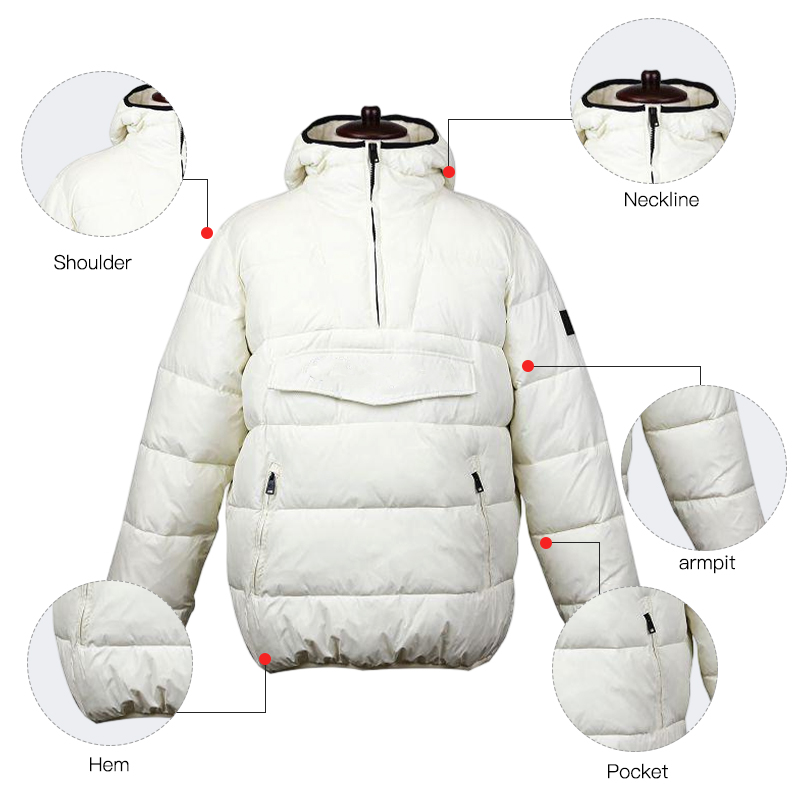
When sub-zero weather sets in, choosing between a down or synthetic puffer jacket becomes one of the most important decisions for outdoor performance. Both insulation types have distinct physical properties, manufacturing advantages, and environmental ideal use cases.
Understanding how down fill power, synthetic fiber structures, shell fabric durability, and garment baffle construction work together enables apparel buyers, outdoor enthusiasts, and clothing brands to select the ideal jacket for any winter environment.
Down Insulation Science: Fill Power, Warmth, and Ethical Standards
Natural down remains the gold standard for pure warmth per ounce. Harvested from the soft underfeathers of geese and ducks, down clusters possess a unique three-dimensional structure that traps warm air in millions of microscopic pockets.
Decoding Fill Power and Loft
Performance down is quantified by fill power—the volume in cubic inches that one ounce of down occupies when fully expanded. Higher fill power ratings indicate larger down clusters capable of trapping more warm air:
-
550 to 650 Fill Power: Delivers reliable warmth for everyday city winter jackets and heavy-duty workwear.
-
700 to 750 Fill Power: Provides high-grade insulation with great packability for skiing and winter hiking.
-
800 to 900+ Fill Power: Delivers ultra-lightweight warmth and extreme compressibility for backcountry mountaineering and polar gear.
Higher fill power down delivers roughly 30% more warmth per ounce than lower fills. This exceptional warmth-to-weight ratio allows down jackets to compress down small enough to fit inside a backpack pocket.
The Ethical Assurance of RDS Certification
Because natural down originates from waterfowl, supply chain transparency is crucial. Responsible Down Standard (RDS) certification guarantees that down clusters are ethically sourced from animals raised without live-plucking or force-feeding. Independent third-party audits ensure complete traceability from farm to finished garment.
Synthetic Insulation: Resilience in Wet Cold and Eco-Friendly Fabrics
While down struggles when exposed to heavy moisture, synthetic insulation thrives in wet, unpredictable conditions. Engineered from spun polyester filaments, synthetic insulation mimics down's air-trapping matrix while providing superior water resistance.
Hydrophobic Performance in High Humidity
Synthetic fibers do not absorb water. When exposed to persistent rain, heavy snow, or internal sweat during high-output activity, synthetic insulation retains up to 90% of its insulating power. It resists clumping, dries rapidly, and remains hypoallergenic throughout long-term wear.
Modern Recycled Fills and Advanced Fiber Technology
Modern synthetic fills have drastically closed the warmth-to-weight gap with natural down:
-
Post-Consumer Recycled Polyester: Crafted from recycled plastic bottles, recycled fills reduce manufacturing energy consumption by nearly 50% while diverting plastic waste from landfills.
-
Microfiber Clusters: Spherical micro-clusters mimic natural down structure, allowing synthetic insulation to recover loft after washing cycles.
-
Graphene-Enhanced Filaments: Integrating conductive graphene into synthetic insulation fibers enhances radiant heat distribution without adding noticeable weight.
Assessing Jacket Construction: Eliminating Cold Spots and Drafts
How insulation is anchored inside a puffer jacket directly dictates its real-world thermal performance. Construction techniques vary between budget everyday jackets and technical mountain shells.
Sewn-Through vs. Baffled Construction
Sewn-through construction stitches the outer shell directly to the inner lining fabric. While lightweight and cost-effective, this method compresses insulation along seam lines, creating uninsulated channels where cold wind penetrates.
Baffled construction utilizes internal fabric divider walls (baffles) that suspend insulation in individual 3D chambers. This design allows down and synthetic clusters to expand to full loft without migration, eliminating cold spots and providing draft-free warmth across the entire torso.
| Feature | Sewn-Through Construction | Baffled Box-Wall Construction |
| Manufacturing Cost | Lower production cost | Higher precision manufacturing |
| Thermal Efficiency | Seam lines create cold spots | Maximum loft with uniform thermal protection |
| Best Application | Casual winter wear, light activity | Technical mountaineering, extreme cold |
Durable Outer Shells and DWR Surface Protection
The outer shell material acts as the first line of defense against abrasion, wind chill, and precipitation.
Durable Water Repellent (DWR) Finishes
A DWR treatment alters the surface tension of the shell fabric, forcing rain and melting snow to bead up and roll off rather than soaking into the fabric weave. Keeping the outer shell dry prevents fabric saturation (wetting out), preserving both breathability and thermal efficiency.
Shell Fabric Durability Ratings
Outer fabrics range from featherlight 20D ripstop nylons used in packable inner layers to rugged 600D polyesters engineered for heavy industrial wear. Pairing a durable ripstop shell with a breathable waterproof membrane (rated at 20,000 mm hydrostatic head) ensures complete weather protection during wind-driven snowstorms.
Functional Features and Sizing for Layering Systems
A puffer jacket's usability depends on ergonomic design choices and proper layering alignment.
Activity-Specific Ergonomics
Skiing and alpine climbing require helmet-compatible hoods with multi-point drawcords to seal out spindrift. Deep fleece-lined hand pockets protect cold fingers, while elastic wrist gaiters with thumbholes prevent sleeves from riding up under gloves. Urban commuting jackets benefit from two-way front zippers that allow easy sitting mobility on trains or buses.
Achieving the Ideal Layering Fit
Proper sizing preserves air-trapping capabilities:
-
Too Tight: Compresses insulation clusters, destroying air pockets and choking off body heat retention.
-
Too Loose: Creates excess air volume inside the garment, forcing the body to waste energy heating trapped dead space.
Trying on a puffer jacket over intended mid-layers ensures shoulder seams align naturally, sleeves cover wrists during motion, and drawcord hems seal out low-level wind drafts.
Frequently Asked Questions
Which insulation type is better for high-humidity environments?
Synthetic insulation performs significantly better in high humidity or steady rain because polyester fibers do not absorb moisture or lose loft when wet.
Can down jackets be washed safely without ruining the fill?
Yes. Down jackets can be laundered using specialized down cleansers in front-loading washing machines, followed by low-heat tumble drying with dryer balls to restore full loft.
What does RDS certification guarantee?
Responsible Down Standard certification ensures that down and feathers come exclusively from humanely treated waterfowl, audited independently throughout the supply chain.
Technical Puffer Jacket Manufacturing with Zdwincome
Bringing high-performance down and synthetic puffer jackets to market requires advanced apparel engineering, precise baffle assembly, and reliable supply chain execution.
As an experienced manufacturing partner for international clothing brands, Zdwincome provides comprehensive OEM and ODM outerwear production solutions. From sourcing RDS-certified natural down and high-loft recycled synthetic fills to executing complex box-wall baffle stitching, precision seam sealing, and custom DWR shell treatments, Zdwincome delivers premium apparel crafted to international quality standards. Supported by scalable manufacturing infrastructure and strict quality control protocols, Zdwincome turns technical outerwear concepts into market-ready jacket collections built for long-term brand success.
Table of Contents
- Down Insulation Science: Fill Power, Warmth, and Ethical Standards
- Synthetic Insulation: Resilience in Wet Cold and Eco-Friendly Fabrics
- Assessing Jacket Construction: Eliminating Cold Spots and Drafts
- Durable Outer Shells and DWR Surface Protection
- Functional Features and Sizing for Layering Systems
- Frequently Asked Questions
- Technical Puffer Jacket Manufacturing with Zdwincome
